
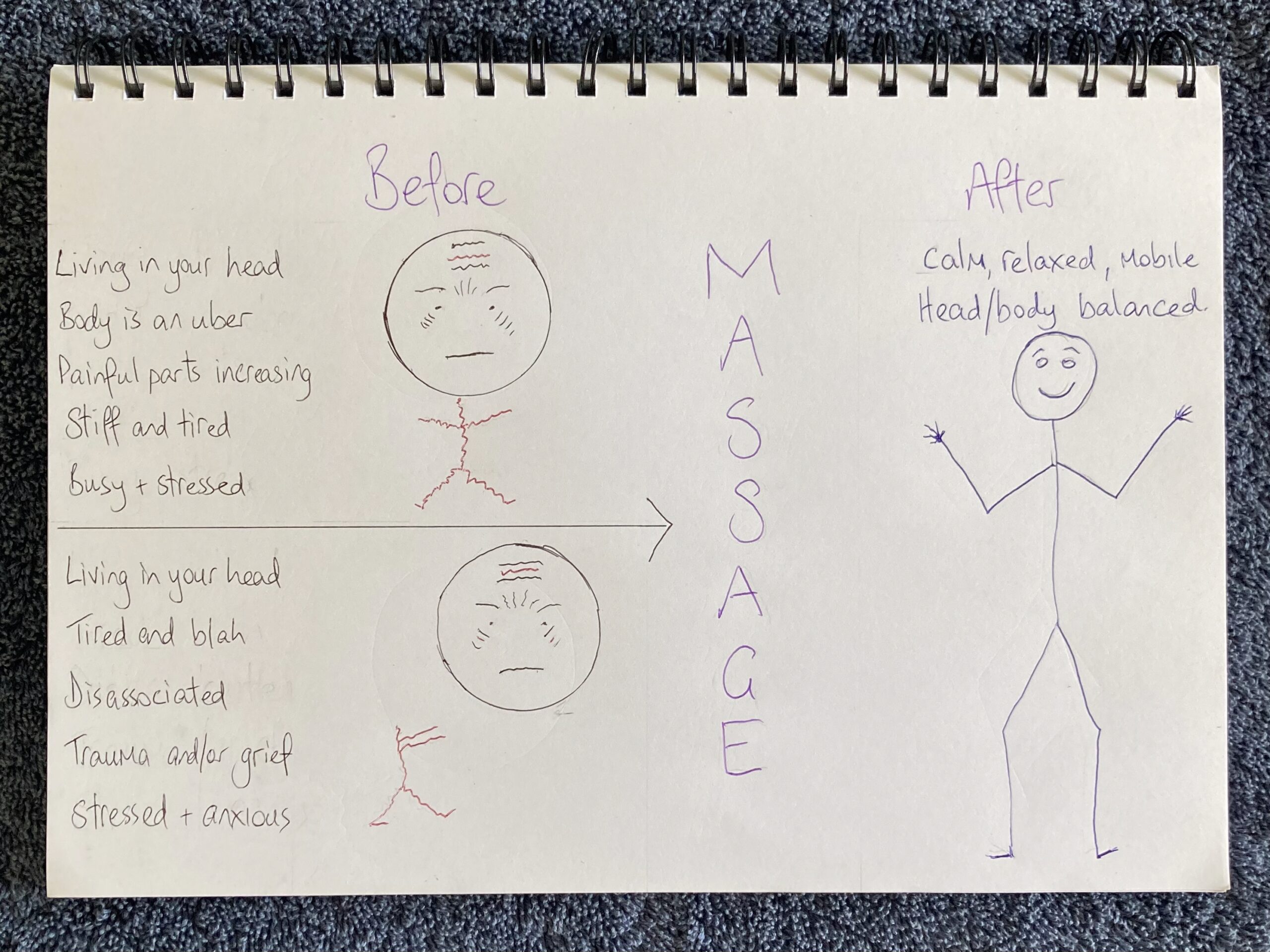
Many people come to me with their energy and attention focused almost entirely in their heads while neglecting their bodies. This phenomenon, which I call being “all in our heads,” is increasingly common in today’s fast-paced world. Modern life, with its relentless demands, screen-centric habits, and pressure to stay mentally sharp, often pulls our energy into overdrive in the mind. As a result, our bodies are deprioritised and left unheard, except when pain forces us to pay attention.
Even our approaches to exercise and self-care are often driven by mental goals, rather than by tuning into the body’s needs. We’ve lost the ability to listen to our bodies unless they’re “shouting” through discomfort or pain.
This disconnection raises an important question: how can we be our best selves when we’re disconnected from the wisdom of our bodies?
The Body’s Intelligence: Backed by Science
Emerging research confirms that the body possesses its own intelligence and is far more than a vehicle for the mind. Neuroscientists studying interoception—the ability to sense internal bodily states—have shown that areas of the brain like the insula cortex process bodily signals to regulate emotions and decision-making (Craig, 2015). Similarly, Stephen Porges’ Polyvagal Theory highlights how the vagus nerve connects the brain and body, emphasising the role of physical states in shaping mental well-being (Porges, 2011).
Additionally, evolutionary perspectives on cognition reveal that intelligence is not solely located in the brain but distributed throughout the body. This idea, known as embodied cognition, argues that the body plays an active role in how we think, feel, and interact with the world (Mehling et al., 2012).
Point being – YOUR BODY IS NOT AN UBER FOR YOUR MIND!
Modern Stress and “Living in Our Heads”
The mental overload of contemporary life often leads to chronic stress, which diminishes bodily awareness. When under stress, the hypothalamic-pituitary-adrenal (HPA) axis activates the body’s fight-or-flight response, narrowing attention to external demands and suppressing internal signals (Sapolsky, 2004). Excessive screen time further compounds this issue, contributing to “digital overload” and physical imbalances like poor posture, tension, and fatigue (Spencer et al., 2019).
Pain often serves as the body’s last resort to capture our mind’s attention. According to somatic therapists like Peter Levine, physical sensations—including pain—are how the body communicates unresolved issues or unmet needs (Levine, 2010). Initially, these signals may be subtle, but if ignored, they escalate to louder forms of discomfort.
Point being – EXPECTING TO FEEL BETTER WITHOUT CHANGING ANYTHING IS NOT GOING TO WORK!
Self-Care and Rebalancing: Listening to the Body
Self-care has become a buzzword, but its deeper meaning lies in reconnecting with the body’s innate wisdom. Mindfulness-based practices like yoga, meditation, and massage help bridge the gap between mind and body by enhancing interoceptive awareness and promoting relaxation (Kabat-Zinn, 1990). These practices empower individuals to notice subtle signals from the body before they escalate into pain or dysfunction.
Massage, in particular, is a powerful tool for recalibrating the balance between mind and body. Clinical research shows that massage can lower cortisol (the stress hormone) while boosting serotonin and dopamine, fostering a sense of well-being (Field, 2014). Beyond its physical benefits, massage encourages individuals to feel present in their bodies, breaking the cycle of being “all in our heads.”
Point being – GET A MASSAGE!
Pain and Discomfort as a Call to Awareness
Pain is often the body’s way of demanding the mind’s attention. As research in psychosomatic medicine has demonstrated, chronic pain conditions frequently stem from the mind-body disconnect fostered by stress and unprocessed emotions (Mehling et al., 2012). By treating pain not only as a symptom but as a message, we can start to approach healing holistically.
We are extraordinary beings, the product of millennia of evolution, with bodies designed to function in harmony with our minds. When we neglect this harmony, our bodies find ways to call us back. Pain, tension, and fatigue are invitations to restore balance, and tools like massage, mindfulness, and body-focused self-care can guide us back into alignment.
Point being – By reconnecting with our bodies and tuning into their wisdom, we can reduce pain, experience greater joy, and navigate life with more ease. It’s not just about “self-care”; it’s about rebuilding the essential relationship between mind and body that allows us to thrive.
References
- Craig, A.D. (2015). How Do You Feel? An Interoceptive Moment with Your Neurobiological Self.
- Porges, S.W. (2011). The Polyvagal Theory: Neurophysiological Foundations of Emotions, Attachment, Communication, and Self-Regulation.
- Levine, P.A. (2010). In an Unspoken Voice: How the Body Releases Trauma and Restores Goodness.
- Kabat-Zinn, J. (1990). Full Catastrophe Living: Using the Wisdom of Your Body and Mind to Face Stress, Pain, and Illness.
- Field, T. (2014). “Massage therapy research review.” Complementary Therapies in Clinical Practice.
- Sapolsky, R.M. (2004). Why Zebras Don’t Get Ulcers.
- Mehling, W.E., et al. (2012). “Body awareness: a phenomenological inquiry into the common ground of mind-body therapies.” Philosophy, Ethics, and Humanities in Medicine.
- Spencer, M.B., et al. (2019). “Effects of Screen Time on Stress and Cognitive Overload.” Journal of Behavioral Sciences.

